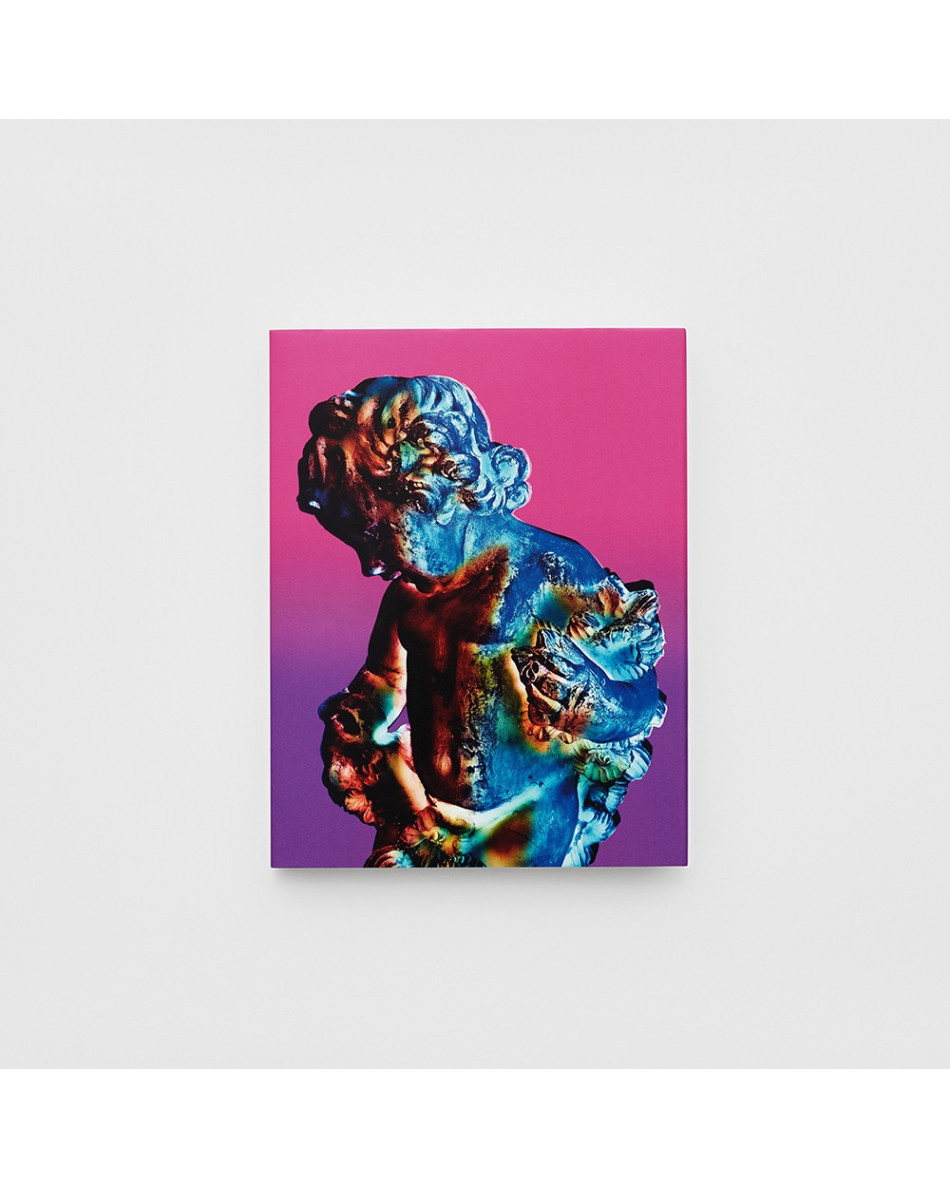
Published July 2026 by Sigma Foundation Photographs by Trevor Key Essay by Charlotte Cotton Interview with Peter Saville and Charlotte Cotton Edited and sequenced by Björn Kusoffsky Design by Stockholm Design Lab Executive Producer Stockholm Design Lab With thanks to Peter Saville Pages: 244 pages Printing: Hakko Bijutsu ISBN: 978-4-911681-02-2 Cover color: 5 variations (Blue/Purple/Red/Yellow/Green) Size: 213 x 285 x 24.5mm
Trevor Key’s collaborative and experimental photographic practice spanned over twenty years (1972–1995). This book is the first to honor his processes and prescience, and is an enduring visual love letter to the future of image-making. Trevor Key is a timely reminder of the proto-digital, practical photographic magic that Key’s photographs embody.
ABOUT
Trevor Key
Trevor Key’s collaborative and experimental photographic practice spanned over twenty years (1972–1995). This book is the first to honor his processes and prescience, and is an enduring visual love letter to the future of image-making. Trevor Key is a timely reminder of the proto-digital, practical photographic magic that Key’s photographs embody.
Over the course of Key’s creative journey, he chose like-minded, exacting conceptual thinkers, including art directors Jamie Reid, David James and Peter Saville with whom he would imagine, visually problem solve, and take creative risks. Within the visual heart of this book is Key and Saville’s experimental collaboration that ventured beyond the confines of commissioned album covers into a personal quest that Saville and Key shared to rethink image-making and have a truly independent and speculative creative flow.
The book is edited and designed by Stockholm Design Lab, with focus on Trevor Key's unique still life photography. In the book’s conversation between Key’s collaborator and celebrated art director Peter Saville and writer and curator Charlotte Cotton, Saville gives a detailed and deeply personal account of the context, practices and radical shifts in visual culture that he and Key created together.
In the mid. 1980s, Key flipped analog darkroom conventions and made vibrant and abstract images that are as contemporary today as they were in 1987. They are an enduring marker of the freedoms that human-scaled and collaborative processes hold, and a route map for creating the visuals of our time.